Woodstock, and the Gate It Grew Beside
A town that didn't grow from trade: how a royal manor and a ducal estate shaped the settlement outside the wall.
A Different Kind of Origin
Most market towns in north Oxfordshire grew because somebody needed to sell something. Banbury's medieval market exploited a river crossing; Chipping Norton paid for its church with wool. Woodstock grew, primarily, because a king was nearby and needed to be served.
The royal hunting park at Woodstock is recorded from the twelfth century, possibly earlier, and the medieval palace within it was a genuine seat of power — Henry II held it regularly, and several monarchs were born or died here. A settlement outside the pale grew up to supply that court: stable hands, provisioners, craftsmen, innkeepers. The town's purpose was attendance, not commerce in its own right, and that distinction never entirely disappeared.
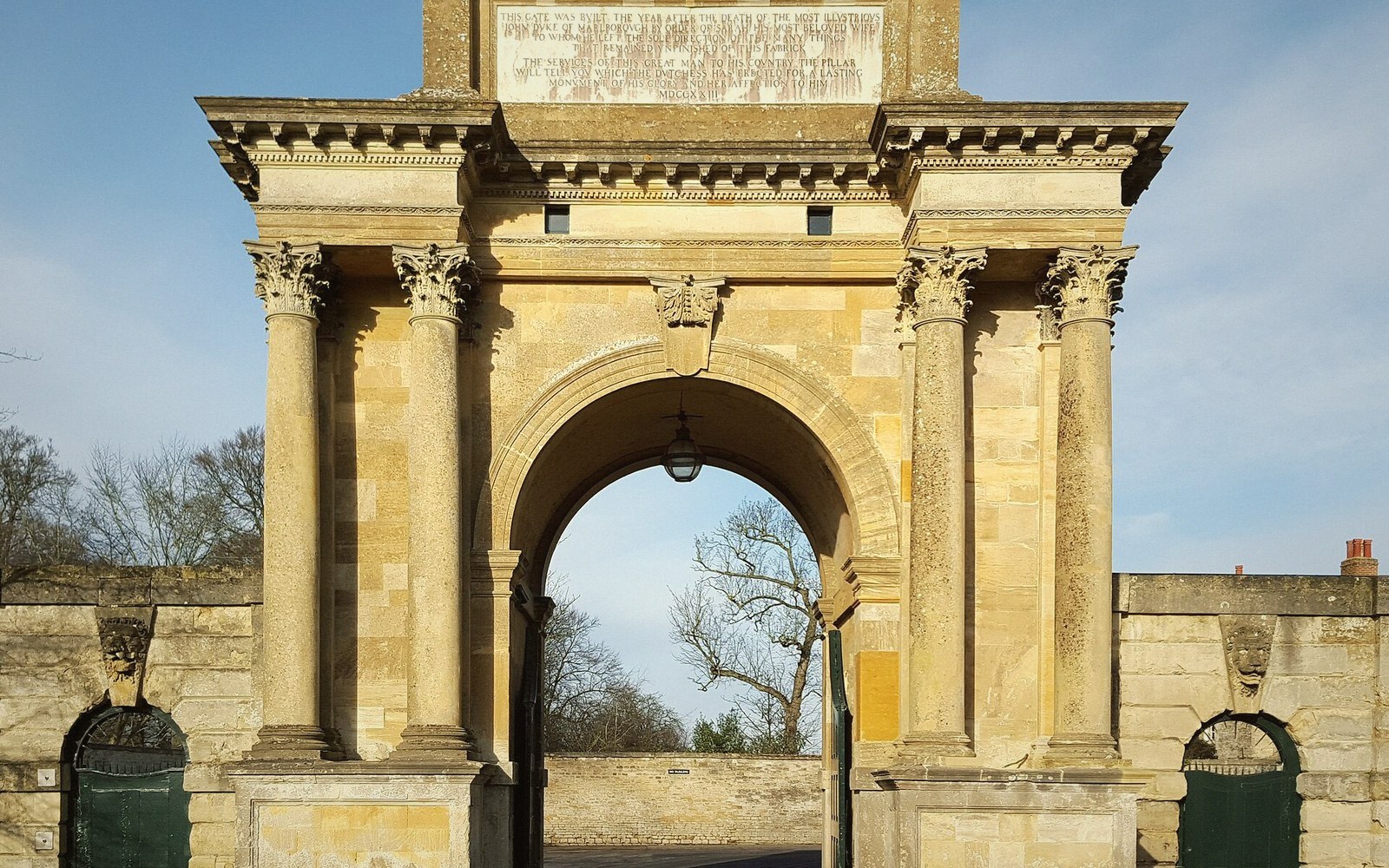
When the palace was demolished after the Civil War and the Marlborough family received the estate following the victory at Blenheim, the relationship between town and park changed its terms but not its essential character. The great gate of the palace of Blenheim now faces directly onto the market square — not as an accident of planning, but as a statement of orientation. The town is arranged around the fact of the wall.
What the Estate Made
Park Street and the streets leading from the square have the compressed, attentive quality of a place that always expected distinguished visitors. The coaching inns are substantial; the building line is tidy; there is a self-consciousness about the townscape that purely agricultural market towns rarely acquire. This is not accidental polish — it reflects centuries of proximity to wealth, and the way that proximity disciplined the built environment.
The ironstone that gives the villages of this district their warm, rough texture is present in Woodstock, but many of the principal buildings are in smoother, more dressed stone, some of it imported from further afield. When you have a great estate next door, materials travel differently. The estate also exercised significant control over the town's development for much of its history: Woodstock was a borough, with its own corporation, but the relationship between municipal independence and ducal influence was rarely simple.
The town received its first market charter in the thirteenth century, and there were glove-making trades here for several hundred years — a craft industry that made use of local deer hide and survived into the nineteenth century. But the market never dominated the town's identity the way Banbury's market dominated its own. Woodstock always had another centre of gravity, visible over the wall.
- Woodstock hunting parkrecorded from the twelfth century, possibly pre-Norman in origin
- Henry IIfrequent occupant of the medieval palace
- Post-Civil Warpalace demolished; Marlborough estate granted following Blenheim
- Thirteenth centuryfirst market charter granted to Woodstock
- Glove-makingactive several hundred years, using local deer hide; declined through the nineteenth century
Reading the Town
Walking Woodstock, you notice that the grain of it points toward the park rather than away from it. The town square is a forecourt as much as a marketplace. Buildings present their best faces toward the estate gate. The Oxford Street approach frames the Column of Victory — visible at a distance across the park — in a way that feels deliberate, because it is.
This is a town that was shaped, over a long period, by the proximity of power and the economics of service. It is not a servile place — it has genuine civic history — but its character is inseparable from what lies behind the wall. Understanding why Woodstock looks as it does means understanding that the gate is not a backdrop to the town. For much of its history, the town was the backdrop to the gate.
An independent guide to North Oxfordshire. Not a tourist board, booking service or official body, and not affiliated with any property or business described.