Bloxham for Length, Adderbury for Strength
The old rhyme ranks the steeples. What it is actually measuring is medieval money, and where it came from.
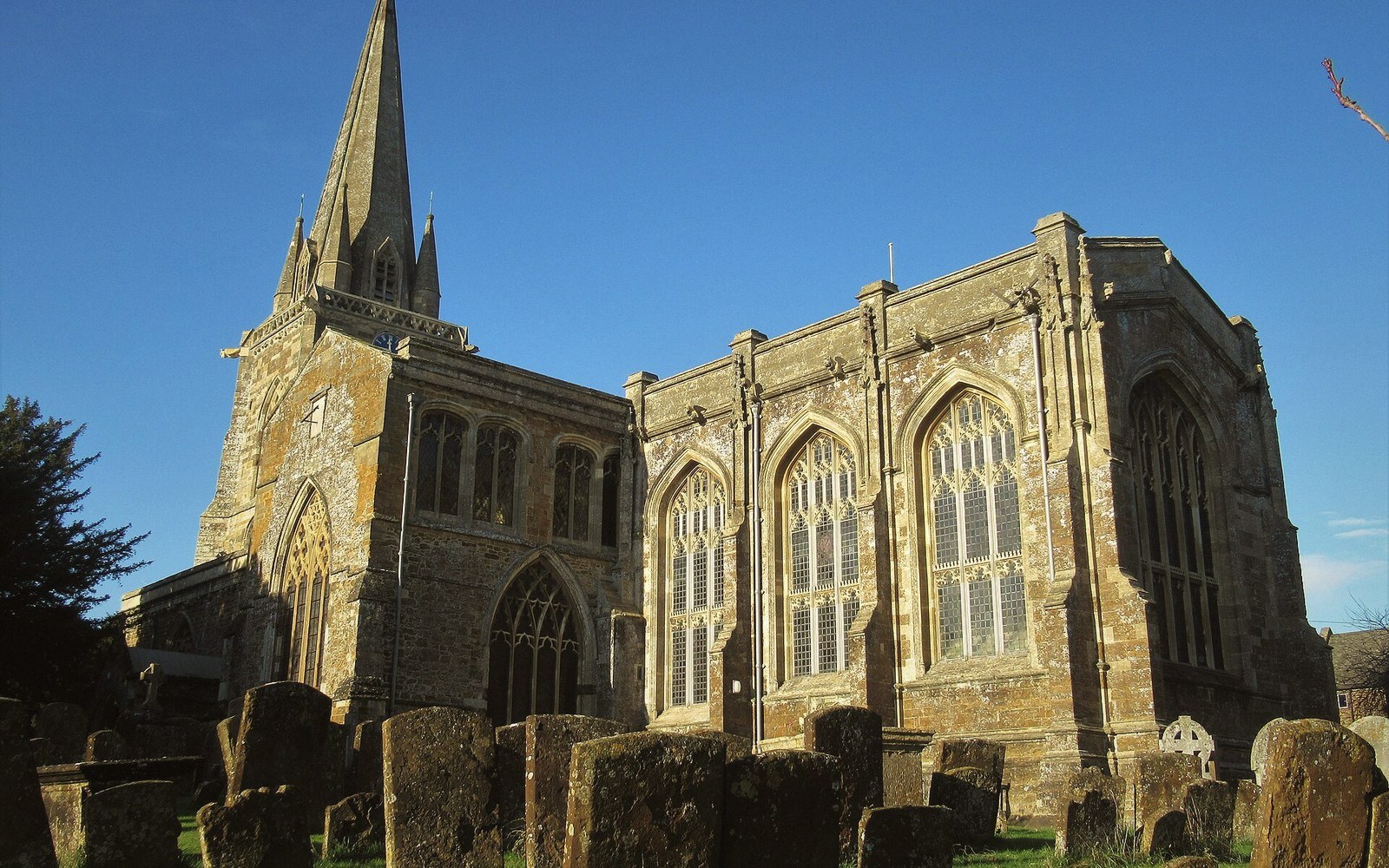
The Rhyme and What It Compares
"Bloxham for length, Adderbury for strength, and King's Sutton for beauty" — the saying is old enough that nobody can pin down its origin, but it has survived because it is, in its compressed way, accurate. The three steeples it ranks stand within a few miles of one another in the Cherwell valley, all built from the same warm ironstone, all belonging to the same broad moment of late-medieval ambition. The rhyme is not really about aesthetics. It is about patronage, and patronage is about money, and money in fourteenth-century north Oxfordshire came from wool.
The church at Bloxham, St Mary the Virgin, has a steeple that rises to around fifty-six metres — tall by any measure for a village church, and conspicuously tall for a landscape that otherwise runs to low hills and open fields. The height was not an accident of site or fashion; it was a statement. The tower and spire were built in stages across the fourteenth and fifteenth centuries, funded in part by the bishopric of Winchester, which held the living. Episcopal money moved differently from merchant money: it was steadier, more institutional, and it tended to produce height rather than ornament.
Strength and Beauty: Adderbury and King's Sutton
Adderbury's claim is different. The steeple there is stouter, the detailing richer, and the nave is one of the finest Decorated-period interiors in the county — a fact that reflects not episcopal patronage but the wool trade at its most direct. The church was substantially built in the early fourteenth century when the Oxfordshire wool industry was at or near its peak, and the money came from the lords of the manor and from prosperous local families whose wealth moved on the backs of sheep. The result is a church where the budget went into breadth and carving rather than sheer altitude: corbels, ballflower ornament, window tracery that rewards close looking.
King's Sutton sits just across the Northamptonshire border and enters the rhyme as the beauty candidate — a judgement most visitors still endorse. Its steeple is a spire rising from its tower, and its claim rests on the elegance of its profile rather than on height or mass. The money there came from a different mix of patrons again, and the result is a silhouette that reads as graceful rather than forceful.
The money there came from a different mix of patrons again, and the result is a silhouette that reads as graceful rather than forceful.
What the Stone Has to Do With It
All three churches share their material: ironstone, or more precisely the marlstone that underlies this part of the Cherwell valley. It comes out of the ground a pale green-grey and weathers, over decades, to the deep rust-orange that makes the district's buildings look as though they have been warmed from within. The medieval builders had no choice in the matter — the stone was here, and carting anything else would have been prohibitively expensive — but the material shaped the outcome. Ironstone is not fine-grained enough for the delicate tracery that Cotswold limestone permitted, so the ornament in these churches tends to be bolder, more muscular, better suited to the "strength" the rhyme identifies in Adderbury than to miniaturist carving.
The rhyme, then, is a compressed piece of architectural criticism that works because each adjective fits the structural logic of its subject. Bloxham is tall because episcopal patronage went upward. Adderbury is strong because wool money bought weight and mass and decoration. King's Sutton is beautiful because its builders spent their effort on the profile. Three steeples, three kinds of medieval wealth, one valley, one stone. The landscape made the material available; the money decided what to do with it.